Built for Malaysian general practice

The clinic runs. The money follows.

Queue, consultation, dispensing, billing and e-invoicing in one system — with the one screen most clinic software leaves out: what your panels still owe you, and how long they have owed it.

Book a walkthrough See what it covers

Currently onboarding a small number of clinics. No card, no commitment.
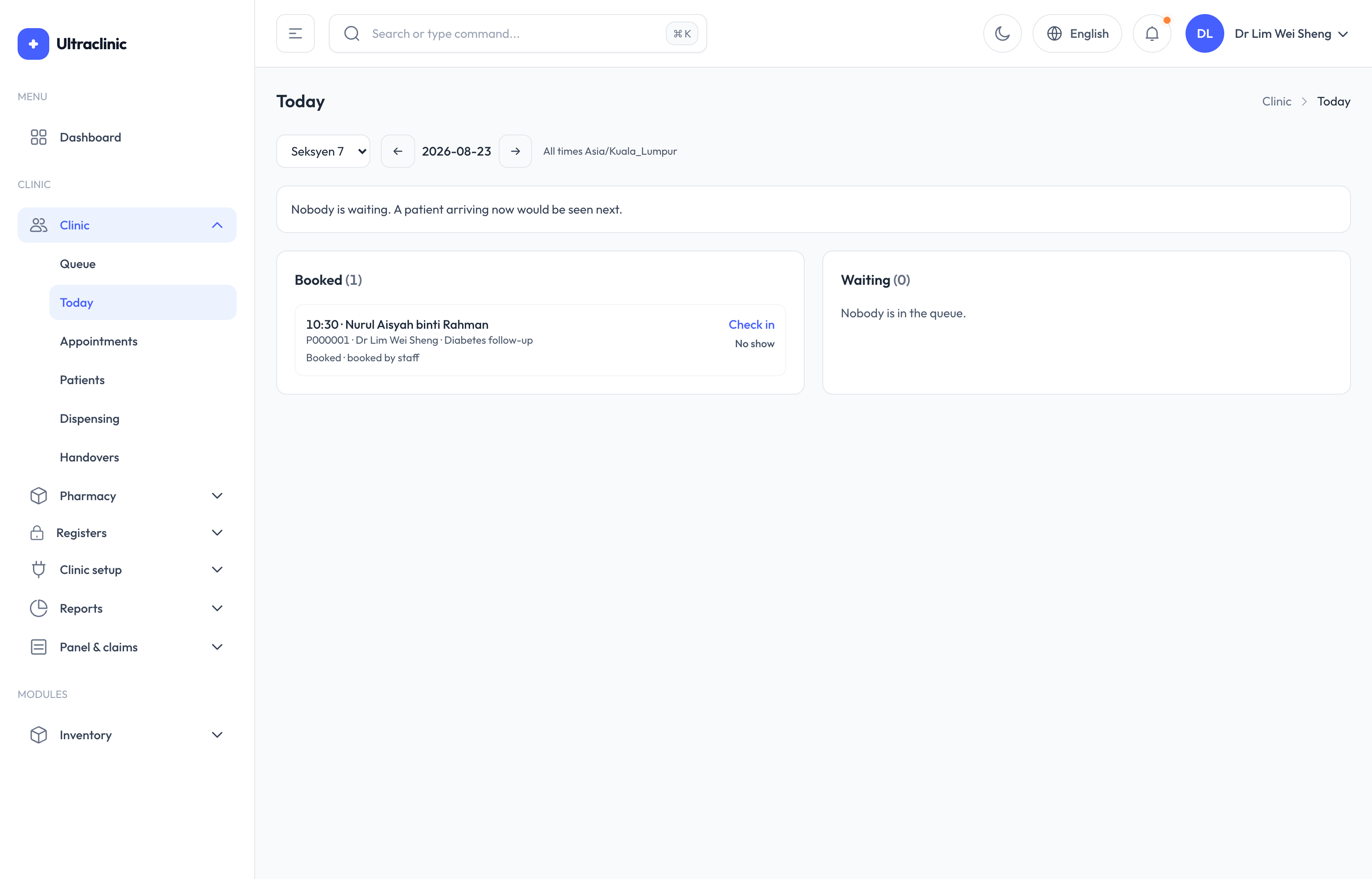
The Today screen: booked appointments on the left, the waiting queue on the right, with the branch and date selector above.
Today, in one screen. Who is booked, who is waiting, and who is next — per branch, on the clinic’s own clock.

Real screenshots of the running product, not mockups. Sample records only — every identity number is masked by the software itself.
2–3 months is the average wait for a panel or managed-care payer to settle — and practising GPs report cases running one to two years.

Reported by a practising Malaysian GP, CodeBlue, May 2025. It is the only figure quoted on this page, and it is not ours.

  • A claim exists for every panel visit. If it was seen, it was claimed — an unbilled visit cannot quietly disappear.
  • Aged by payer, 0–30 / 31–60 / 61–90 / 90+, so a claim sitting at nine months stands out.
  • Claimed, approved and paid stay three separate numbers — short payment is visible instead of silently absorbed.
  • Rejections grouped by reason, so a recurring fixable mistake reads as one pattern, not fifty annoyances.

Everything between the front door and the drawer

Built around what a shoplot practice actually does in a day — not a hospital system with features removed.

Registration and queue

MyKad at the counter, one queue per branch, and a day view that shows the room as it actually is.

Consultation and notes

Complaint, examination, ICD-10 diagnosis, vitals. Signed notes are immutable; corrections are addenda, never edits.

Dispensing and stock

Batch and expiry tracked to the lot, statutory labels, and a poisons register that numbers itself.

The reports you actually run

Daily takings that reconcile against the drawer, with panel work on its own line — because it is not cash.

Billing and e-invoicing

One bill per visit, consultation and drugs and procedures on it, ready for MyInvois submission.

Multi-branch, one login

Each clinic sees only its own records. Group owners get one consolidated view, and one bill.

Three screens, three jobs

The counter, the consulting room and the patient's phone are different problems. They are not the same app shrunk down.

Front desk & management

The web console

Registration, queue, dispensing, claims, reports, settings. Full records, roles and permissions for every member of staff.

The doctor

The tablet

The chart, the note, the prescription, the certificate — offline-first, so a dropped connection never costs a consultation.

The patient

The phone

Appointments, queue position, their own visit history and certificates. A parent can hold a child's record alongside their own.

What it looks like in the room

Taken from a live deployment, with seeded sample records. Nothing here is a mockup.

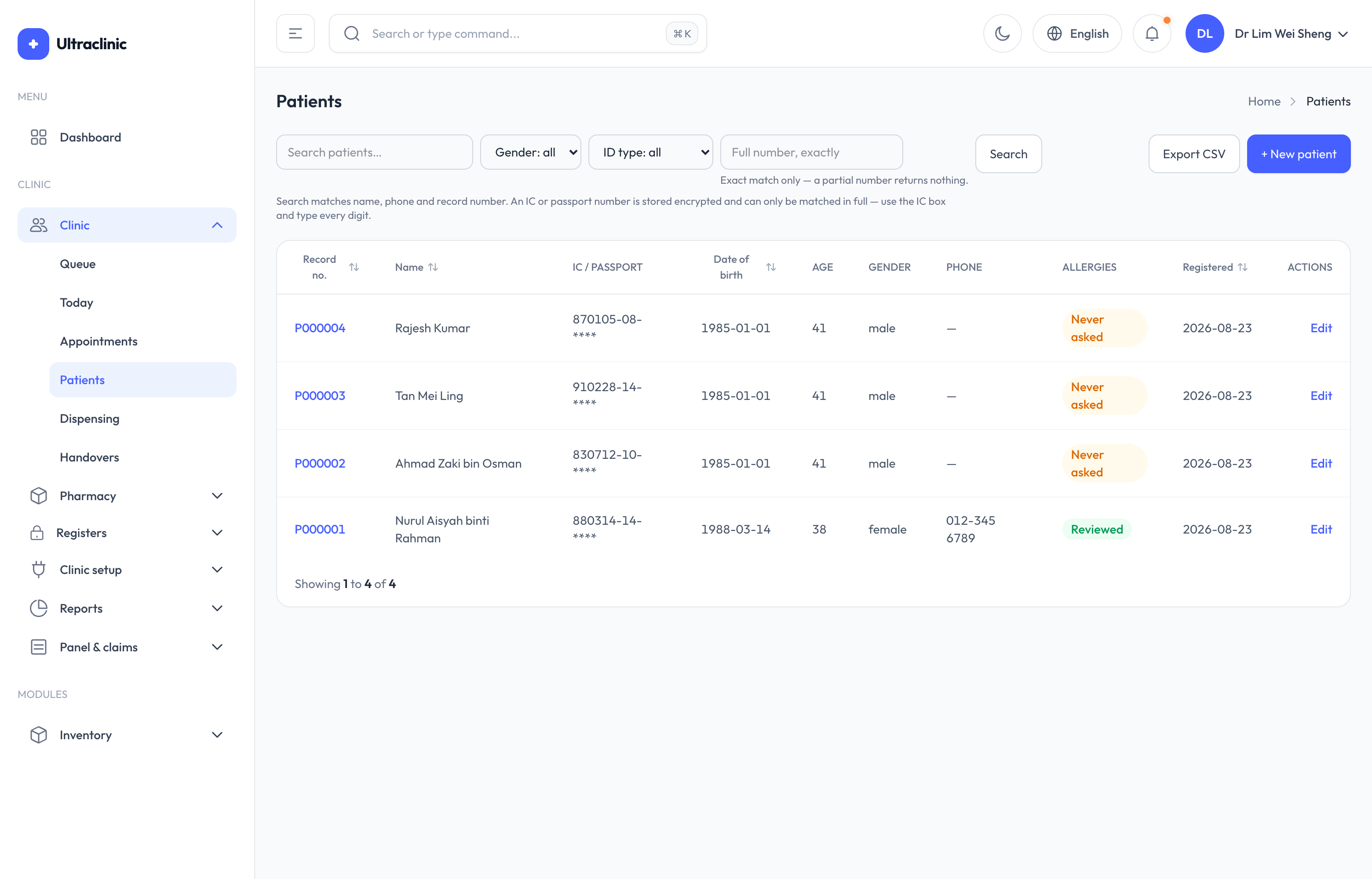
The patient list, showing record number, masked identity number, age, gender, allergy review status and registration date.
Identity numbers are masked on screen. An IC is stored encrypted and matched only in full — a partial search returns nothing, by design.
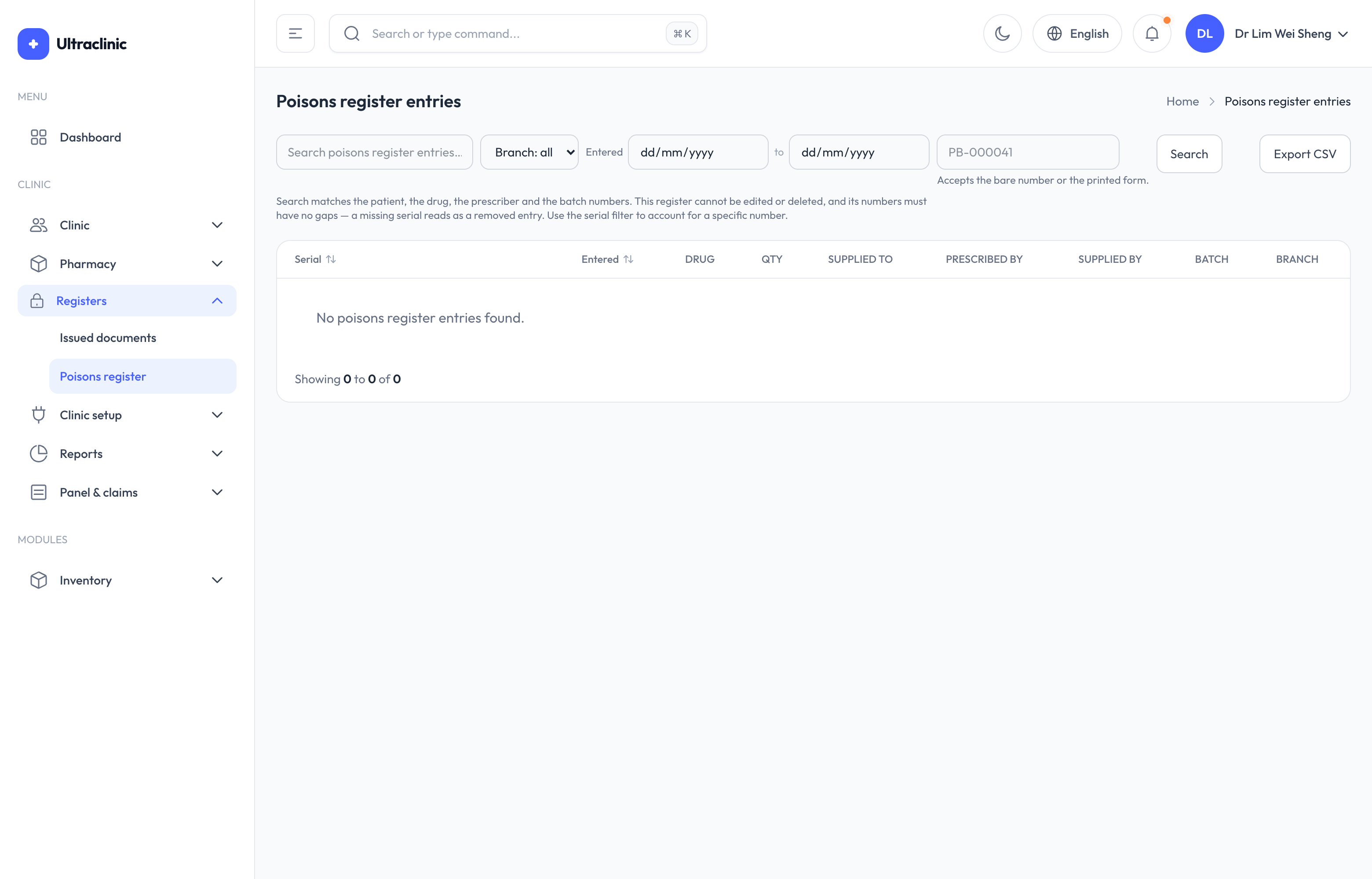
The poisons register, a numbered statutory sequence of controlled-medicine supplies.
The poisons register numbers itself. A statutory sequence you can hand to an inspector, with its gaps accounted for.
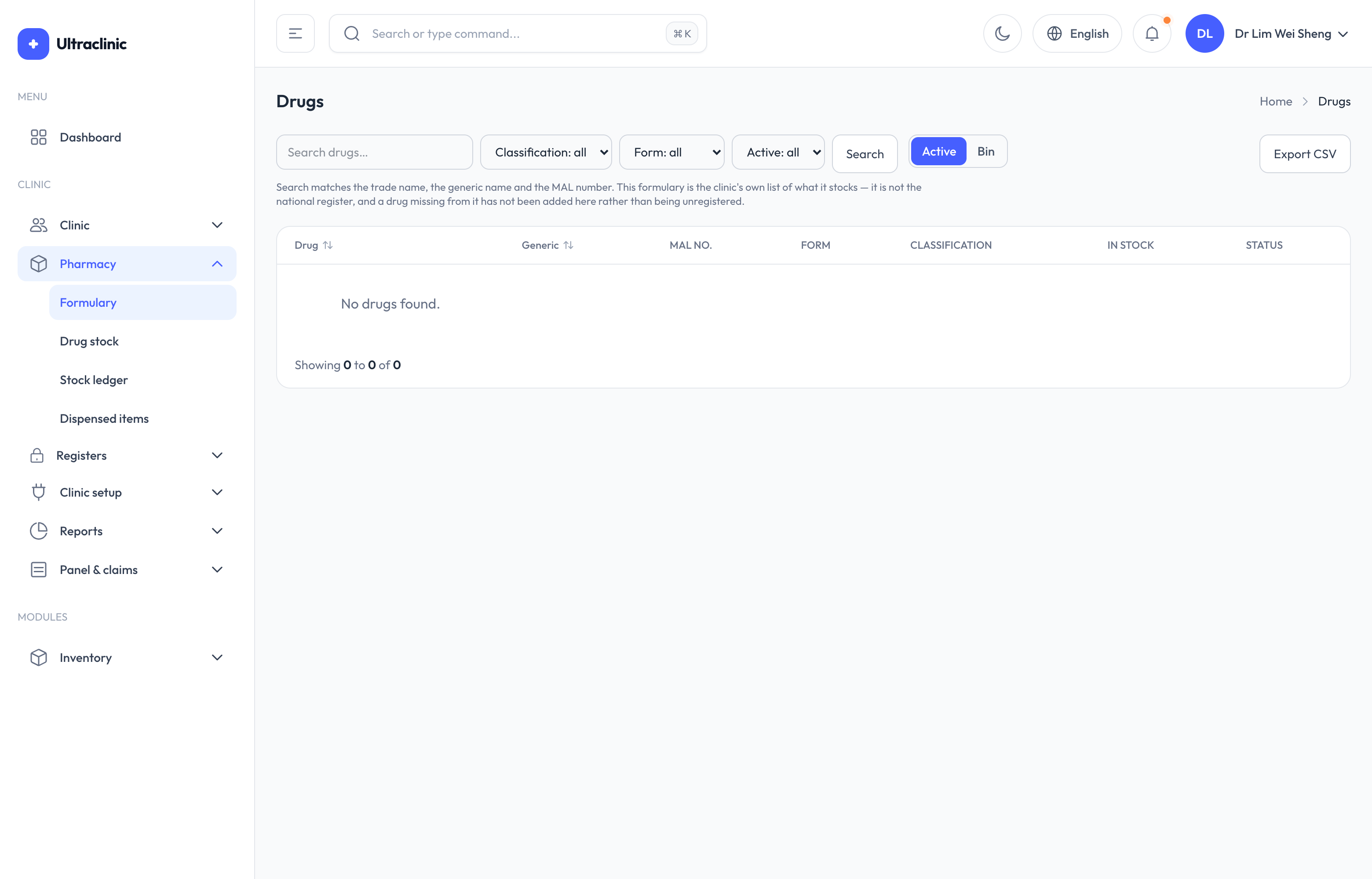
The clinic formulary, listing drugs with strength, form, MAL number and poison classification.
Your formulary, your prices. Strength, form, MAL number and poison class on every line.
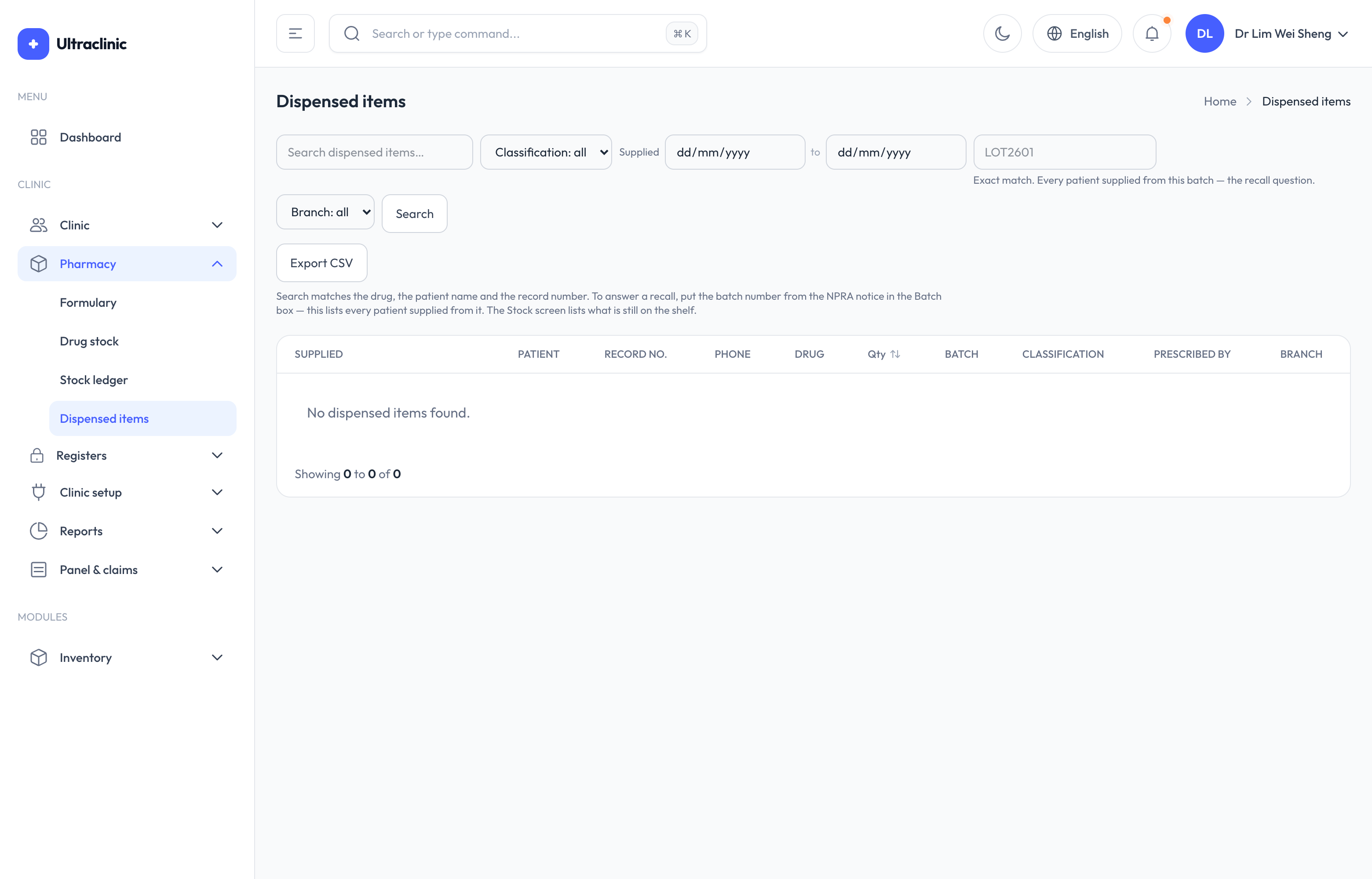
The dispensing screen, listing what was supplied against each visit.
Dispensing is tied to the visit. What was supplied, by whom, against which consultation — and to the batch it came from.
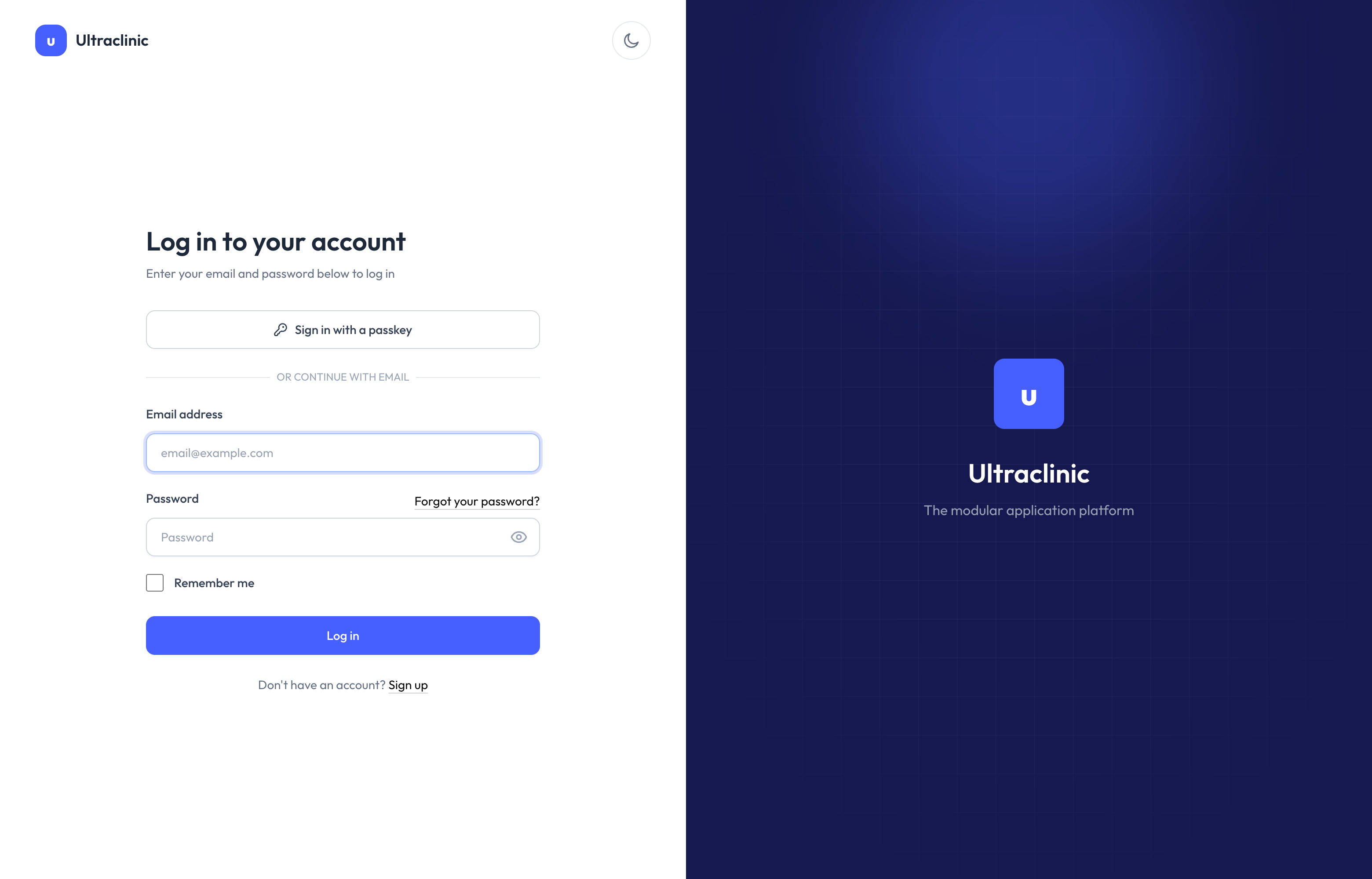
The Ultraclinic sign-in screen, with email, password and a passkey option.
Passkeys, not just passwords. Staff sign in on the counter machine without typing a shared password into a shared browser.

Designed around the rules, not retrofitted to them

Malaysian private practice carries obligations most clinic software treats as an afterthought. These shaped the data model before the first screen was drawn.

PHFSA 1998 — records retained, never deleted on request Poisons Act 1952 — statutory dispensing labels and register PDPA 2010 — health data treated as sensitive personal data MyInvois / LHDN — e-invoicing built in, not bolted on ICD-10 — WHO coding on every diagnosis Identity numbers encrypted, never in a URL or a log

What we are not going to pretend

This is a young product and we would rather you hear that from us. It is in active development and onboarding a small number of clinics who want a say in what gets built next.

We do not submit claims to any payer portal on your behalf — no Malaysian TPA publishes an interface that would let us do it honestly. Ultraclinic assembles the claim completely, and a person submits it. We think that is the right trade.

Pricing is set per clinic. Talk to us and we will quote you plainly.

Book a walkthrough